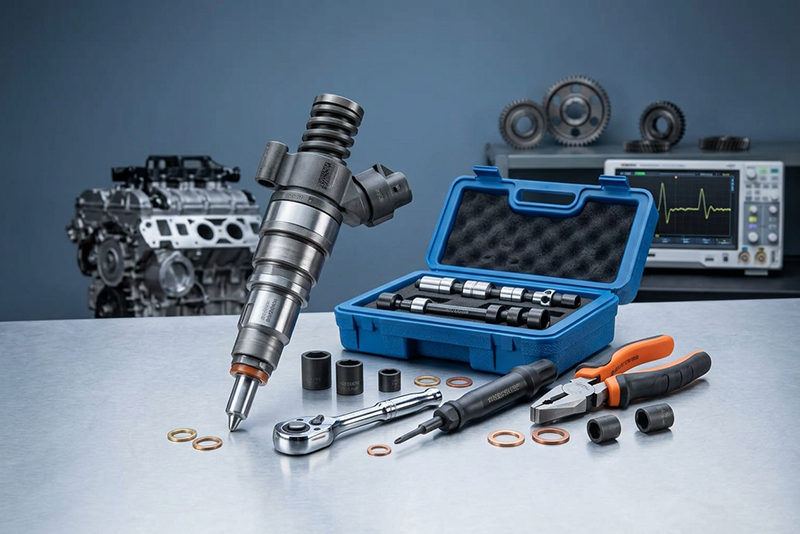
A diesel injector installation kit is not an optional add-on when you are replacing injectors. It is the small-parts package that helps keep combustion pressure, fuel, oil, and debris where they belong. Reusing crushed sealing washers, hardened O-rings, or damaged hold-down hardware can turn a straightforward injector job into a repeat repair, a compression leak, or a contaminated fuel system.
For a working truck, that risk costs more than parts. It can mean lost hours in the shop, a missed load, rough running under load, hard starts, fuel odor, or a check engine light that sends the truck right back to the bay. The right kit supports the injector installation, but it must match the engine and the repair scope.
An injector seals several critical areas at once. Depending on the engine design, the injector must seal combustion gases at the cylinder head, fuel at the supply and return connections, and sometimes oil in the injector bore or valve cover area. A proper installation kit supplies the replaceable components that make those seals reliable after the old injector comes out.
The exact contents vary by platform. A common-rail Cummins, Power Stroke, Duramax, Detroit, CAT, International, Volvo, or Paccar engine may use different seal materials, connector tube seals, hold-down bolts, injector cups, and torque procedures. There is no universal kit that fits every diesel injector job correctly.
That is why part number verification matters. Match the kit to the engine family, model year, injector style, and fuel-system configuration. If the truck has been updated with later injectors or modified fuel-system components, confirm the actual parts on the engine before ordering.
At minimum, most diesel injector installation kits include new sealing components designed for the injector being installed. Copper combustion washers are common on many applications. These washers deform under specified clamp load to seal the injector against the cylinder head. Once crushed and heat-cycled, they should not be reused.
O-rings are equally important. They may seal fuel passages, return circuits, or oil passages, depending on the system. New O-rings need to be the correct size and material. A seal that looks close is not good enough when it is exposed to diesel fuel, heat, pressure, and vibration every day.
Some applications also require injector hold-down bolts, hold-down clamps, connector tube seals, fuel return line seals, and injector cups or sleeves. On certain engines, the hold-down bolt is torque-to-yield and must be replaced. Reusing it can reduce clamping force even if it appears undamaged.
A complete job may also call for related service parts outside the basic kit. Valve cover gaskets, high-pressure fuel lines, return-line assemblies, fuel filters, intake gaskets, and rocker cover hardware should be inspected before the truck is reassembled. The best approach depends on what was removed, what is leaking, and what the service manual requires.
Injector sealing parts live in one of the harshest areas of the engine. The combustion washer sees extreme heat and cylinder pressure. Fuel seals face chemical exposure and pressure pulses. A worn O-ring can cut during installation, flatten from age, or fail once the engine reaches operating temperature.
The usual result is not always immediate. A truck may idle fine after the repair, then develop a misfire, fuel leak, black residue around the injector, or combustion blow-by after a few heat cycles. On some engines, escaping combustion gases can erode the injector bore or damage the cylinder head sealing surface. What began as a low-cost shortcut can become a much larger repair.
For fleet maintenance, replacing the seals and required hardware with every injector installation is the controlled, repeatable process. It helps technicians deliver the same standard across every truck and reduces avoidable comebacks.
Modern diesel fuel systems do not tolerate contamination. A small amount of dirt, rust, lint, or damaged seal material can affect injector performance or enter a high-pressure fuel circuit. Before opening the system, clean the injector area, valve cover area, and fuel-line connections thoroughly. Keep open ports capped, and do not leave removed parts exposed on a dirty workbench.
Inspect the injector bore and seating surface before installing the new injector. Carbon buildup must be removed carefully without gouging the head or allowing debris to fall into the cylinder. Use the correct bore-cleaning tool and follow the engine manufacturer’s procedure. Aggressive scraping with an improvised tool can create a sealing problem that a new washer cannot fix.
Lubricate O-rings only as specified for that application. Some seals require clean engine oil, while others should be installed dry or with an approved lubricant. Petroleum products, shop grease, or the wrong chemical can swell certain seal materials and cause an early failure.
The injector hold-down system is engineered around a specific clamp load. Under-torque can allow combustion leakage. Over-torque can stretch hardware, distort components, or damage threads in the cylinder head. Use a calibrated torque wrench and follow the exact torque sequence, angle specification, and tightening stages for the engine.
Fuel-line connections deserve the same attention. High-pressure common-rail lines must seat squarely and be tightened to specification. Do not force a line into place or use it to pull the injector into alignment. If the line will not seat naturally, stop and inspect the injector position, connector tube, threads, and sealing surfaces.
Some applications require injector trim code entry after replacement. This is especially common on electronically controlled systems where the engine control module uses injector-specific calibration data to manage fueling. Installing a quality remanufactured injector without programming the correct code can lead to poor balance rates, rough idle, smoke, fuel economy issues, or diagnostic trouble codes.
An installation kit addresses the seals and hardware around the injector. It does not correct the reason an injector failed. If there is metal debris in the fuel system, water contamination, a failing high-pressure pump, damaged wiring, excessive return flow, or a compression problem, simply replacing injectors may not solve the truck’s issue.
Look at the failure pattern. One failed injector may point to an isolated electrical or mechanical problem. Multiple failed injectors, especially on a common-rail system, can indicate contaminated fuel or pump failure. In that situation, the correct repair may include a contamination kit, fuel tank cleaning, line replacement, filter replacement, and inspection of the entire fuel system.
Before installation, confirm the diagnosis with scan data, balance rates where applicable, return-flow testing, fuel-pressure readings, and a visual inspection. A strong diagnostic process protects the customer, the replacement part, and the warranty.
A cheap seal kit is expensive if it creates a fuel leak or forces the cab, valve cover, or intake components to come back off. Use installation components built for the engine, and pair them with injectors that have been properly tested and prepared for service.
American Diesel Parts supplies diesel injectors and installation accessories for major heavy-duty and pickup platforms, with remanufactured injector options that are tested and programmed when the application requires it. That matters when you need a repair-ready part, correct fitment, and support from people who understand the system you are servicing.
Before the truck leaves the shop, inspect for external leaks, verify fuel pressure and injector-related data, clear applicable codes, and road test under conditions that reflect the customer’s workload. A clean install with the right diesel injector installation kit gives the new injector its best chance to deliver reliable miles instead of another appointment.