A diesel engine can have clean fuel, good compression, and no active fault codes yet still run rough because one injector is not delivering fuel correctly. Diesel injector testing separates a true injector failure from problems caused by wiring, fuel supply, air intrusion, sensors, or mechanical engine damage. That distinction matters when a truck is losing power, smoking under load, or burning through fuel on the job.
Replacing injectors without proper diagnosis can waste money and extend downtime. A complete test process tells you whether the injector is the problem, which cylinder is affected, and whether a single replacement makes sense or the fuel system needs a broader repair.
An injector does more than open and close. It must deliver the correct amount of fuel, at the correct pressure, with the correct spray pattern and timing response. On common rail systems, it also has to control internal leakage. Small errors in any of those areas can turn into a noticeable drivability problem, especially under heavy load.
Proper diesel injector testing should verify fuel delivery, return flow, electrical operation, nozzle performance, and leakage. The exact method depends on the engine platform. A mechanical injector used in older Cummins, Caterpillar, or Detroit applications is tested differently from an electronically controlled common rail injector on a Duramax, Power Stroke, Cummins ISX, or Paccar engine.
A capable diagnostic process begins with the truck, not the test bench. Scan data, fault codes, cylinder balance information, rail pressure readings, and a visual fuel-system inspection narrow the problem before parts come off. A bad injector can create trouble codes, but no code does not prove the injectors are healthy.
For common rail applications, the technician should also confirm that the lift pump, fuel filters, fuel lines, pressure regulator, rail pressure sensor, and high-pressure pump are doing their jobs. Low supply pressure, restricted filtration, contaminated fuel, or air entering the system can make good injectors look bad.
Injector failure does not always start with a no-start condition. More often, it shows up as a work truck that does not pull the same way it did last month. Hard starts, extended cranking, rough idle, a cylinder misfire, reduced fuel mileage, white smoke, black smoke, and excessive diesel knock all deserve attention.
White smoke can indicate unburned fuel from an injector that is not atomizing correctly or a cylinder that is not combusting efficiently. Black smoke can point to overfueling, but it can also come from restricted air flow, boost leaks, turbocharger problems, or EGR-related issues. That is why smoke alone is not an injector diagnosis.
Fuel dilution in the engine oil is a more urgent warning sign. An injector that leaks or sticks open can wash down a cylinder and allow excess fuel into the crankcase. If the oil level rises, smells strongly of fuel, or becomes unusually thin, park the truck until the source is found. Continuing to operate it can damage bearings, rings, and other expensive internal components.
A sudden change in exhaust temperature between cylinders, repeated regeneration issues on an emissions-equipped truck, or a persistent contribution imbalance can also justify injector testing. Fleet operators should take these early indicators seriously. Finding one weak cylinder before it damages a piston or wipes out a turbocharger is far less expensive than repairing an engine after a roadside failure.
A scan tool is the starting point for many electronically controlled diesel engines. Cylinder contribution, smooth-running values, injector correction rates, commanded versus actual rail pressure, and related fault codes can reveal where to look. These readings are useful, but they are not a final verdict. An injector with acceptable correction numbers may still fail under load, while a high correction value can be caused by low compression or a fuel-supply restriction.
A cylinder cutout test is another useful step. The engine control module disables one cylinder at a time while the technician watches RPM change, vibration, or contribution data. A cylinder that makes little difference when disabled is weak, but the reason still needs to be confirmed.
Return-flow testing is especially valuable on common rail systems. Internal injector wear allows too much fuel to return to the tank instead of remaining available for injection. When one injector returns excessive fuel, rail pressure may drop during cranking or acceleration, causing hard starts, low-power complaints, and no-start conditions. Testing all injectors together matters because relative return volume often identifies the outlier.
Electrical checks are also part of the process. Depending on the system, a technician may test injector resistance, circuit continuity, connector condition, harness damage, and command signals. A broken wire near the valve cover, oil contamination in a connector, or a failing injector driver can imitate a mechanical injector issue.
Never loosen high-pressure common rail fuel lines with the engine running. Diesel fuel at injection pressure can penetrate skin and cause a severe injection injury. Use the correct gauges, fittings, eye protection, and manufacturer procedures. Fast diagnosis is valuable, but safety is not optional.
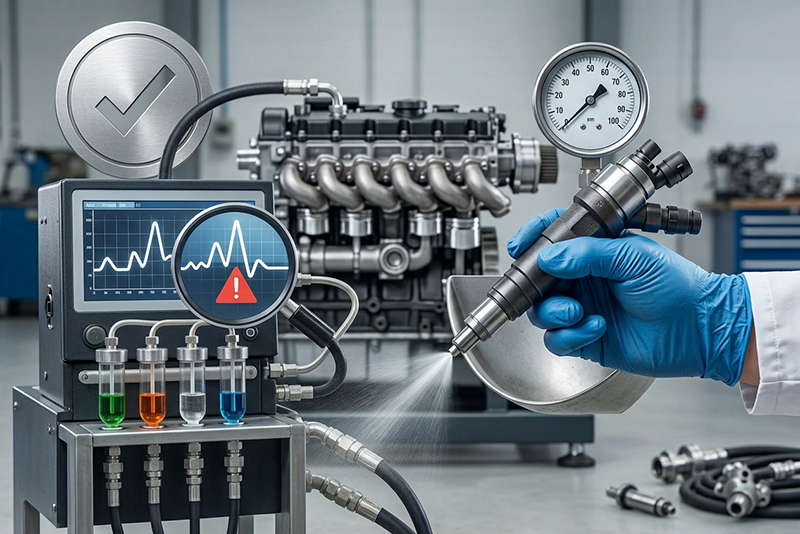
When an injector is removed, a professional bench test can measure performance far beyond what on-truck testing can show. Advanced equipment simulates operating conditions and checks opening response, fuel quantity, return flow, leakage, spray pattern, and performance at multiple pressure and pulse-width settings.
The spray pattern matters because fuel must atomize correctly to burn efficiently. A nozzle that dribbles, streams, or has a distorted pattern can cause poor combustion and high cylinder temperatures. Internal leakage matters just as much on modern systems. The injector may appear to function at idle but lose control when rail pressure and engine demand increase.
Bench testing also identifies whether an injector can be rebuilt to specification. Reputable remanufacturing is not simply cleaning a used injector and installing a few seals. Worn or damaged internal components must be addressed, the injector must be calibrated, and its performance must be verified against the required specifications.
On many electronic common rail injectors, the calibration results generate a trim code or compensation code. That code must be programmed into the engine control module when required by the application. Installing an injector without the correct programming can lead to rough operation, smoke, poor fuel economy, and inaccurate cylinder fueling corrections.
It depends on the failure and the condition of the fuel system. If testing finds one isolated injector failure and the fuel is clean, a targeted repair may be the right call. That approach can control cost and get a truck back in service quickly.
However, injector failures caused by water, metal debris, rust, or widespread fuel contamination demand a larger repair plan. Replacing only the failed injector while leaving contaminated lines, rails, pumps, and filters in place can destroy the replacement part quickly. Metal from a failing high-pressure fuel pump is particularly serious because it can travel throughout the system.
In that situation, the best repair may include a contamination kit, fuel-system flushing, tank cleaning, filter replacement, and inspection or replacement of the pump, rail, and injectors as the application requires. It costs more upfront, but it prevents repeat failures and protects warranty coverage.
For higher-mileage engines, replacing a matched set of injectors can also make practical sense when multiple units test marginal. This is common on trucks that work hard every day, where uneven fueling can hurt power balance and fuel economy. The decision should be based on test results, application demands, budget, and the condition of the remaining injectors – not a guess.
Once diagnosis confirms an injector issue, match the replacement to the engine serial range, injector part number, emissions configuration, and required calibration. Similar-looking injectors can have different flow rates, connector styles, nozzle designs, or trim-code requirements. Ordering by vehicle year alone is not enough for many commercial diesel applications.
American Diesel Parts supplies remanufactured, rebuilt, OEM, and premium replacement injectors for major diesel platforms, with testing and programming considerations built into the selection process. Before installation, verify the fuel system is clean, use new seals and required installation components, follow torque specifications, and complete any programming or relearn procedure called for by the manufacturer.
Keep the old injector and package it carefully if a core return is required. A rebuildable core helps control the cost of quality remanufactured parts, but cores damaged by disassembly, corrosion, missing components, or severe contamination may not qualify for full credit.
A tested injector is not just a replacement part. It is protection against repeat diagnosis, wasted labor, and a truck that comes back with the same complaint. Get the fuel system checked before ordering, install the correct calibrated injector, and give the engine the clean fuel supply it needs to stay on the road.